Most people tour cabins on a Tuesday. The roads are clear, the street is quiet, there is parking everywhere, and every house shows beautifully. Then they close in spring, come up for their first holiday weekend, and find out what the place is actually like when the mountain is full.
I would rather you find that out before you write the offer.
A busy holiday weekend is the single most useful day of the year to look at a Big Bear property, and almost nobody uses it that way. The town is at capacity. Every cabin on the block is occupied. The snow, if there is any, has been driven over for four days. You are seeing the house under load instead of under ideal conditions, and load is what tells you the truth.
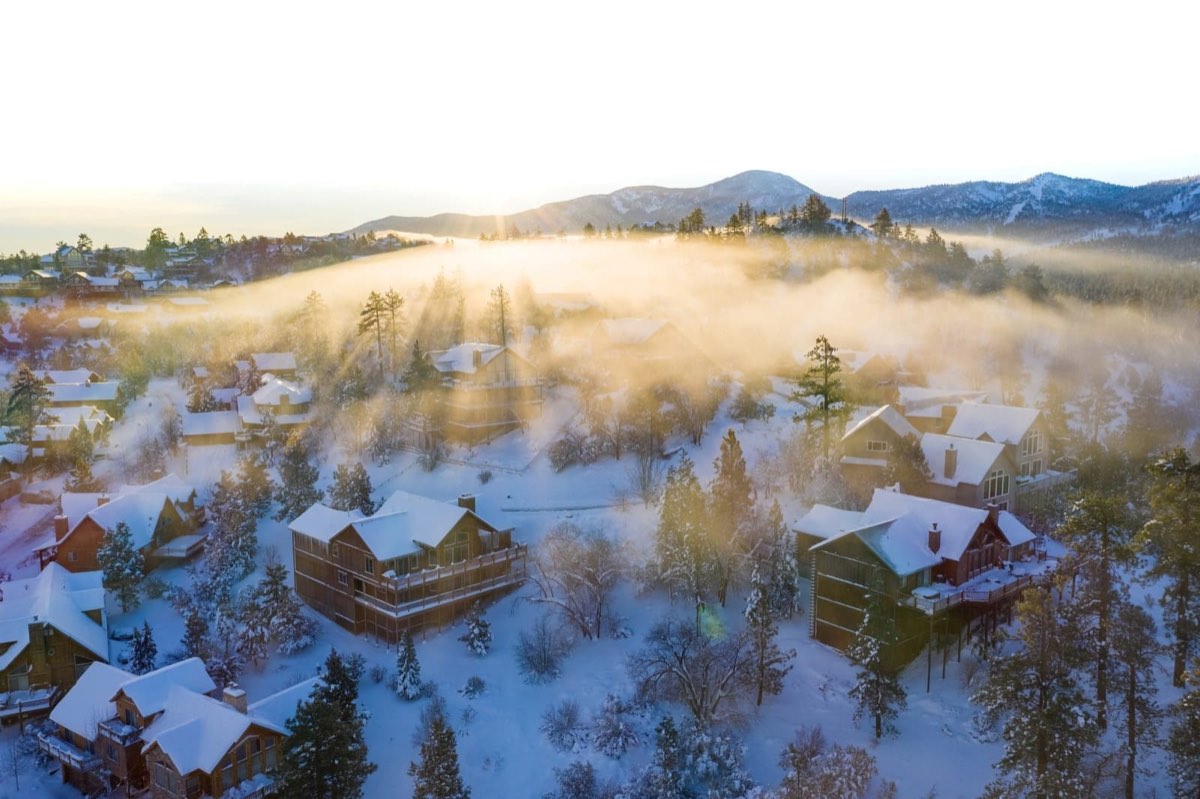
This is the one that costs people the most money and the one that is invisible midweek. A driveway that holds two cars in July holds one in February, because the plow berm takes the rest. If you are buying a vacation rental, a listing that sleeps eight and parks two is a listing with a parking problem in every review. Go stand in the driveway on a Saturday in a busy week and count what actually fits, with snow on the ground.
Big Bear has city-maintained roads, county roads, and private roads that look identical on a map and in a photograph. On a clear Tuesday you cannot tell them apart. On a Saturday after a storm you absolutely can. Ask the question in writing, and then go look at the street. A private road with no maintenance agreement is a real expense and a real access risk, and it is worth knowing before you fall in love with the kitchen.
Every steep driveway in this town is fine in summer. The question is whether you can get up it with four inches of fresh snow and a car full of groceries, and whether your guests can. Walk it. If you would not want to back down it in the dark, that is information.
Midweek in the off-season, almost every cabin around you is empty. That is not the neighborhood. That is the neighborhood with nobody in it. On a holiday weekend you find out whether the house next door is a quiet family place or a short-term rental that sleeps fourteen, and whether the block is the kind you want to be on. Neither answer is wrong. You just want to know which one you are buying.
A cabin that holds temperature with one person and a closed door is a different building from a cabin with nine people, wet gear by the stove, and a door that opens every few minutes. Pay attention to how the heat is delivered and how quickly rooms come back. Mountain homes are heated in a lot of different ways here, and some of them do not keep up.
Plenty of properties are on septic. A full house for four days is the stress test. Ask when the system was last pumped and what the capacity is relative to how many people the house is set up to sleep. This matters enormously if your plan is to rent it.
A lot of homes here are described as walking distance to the Village or to the slopes. Some genuinely are. Others are walking distance in the way that a mile uphill in the dark at twenty-eight degrees is walking distance. Do the walk, at night, in what you would actually be wearing. If it works, that is a real asset and worth paying for. If it does not, better to know now than to write it in your own listing later.
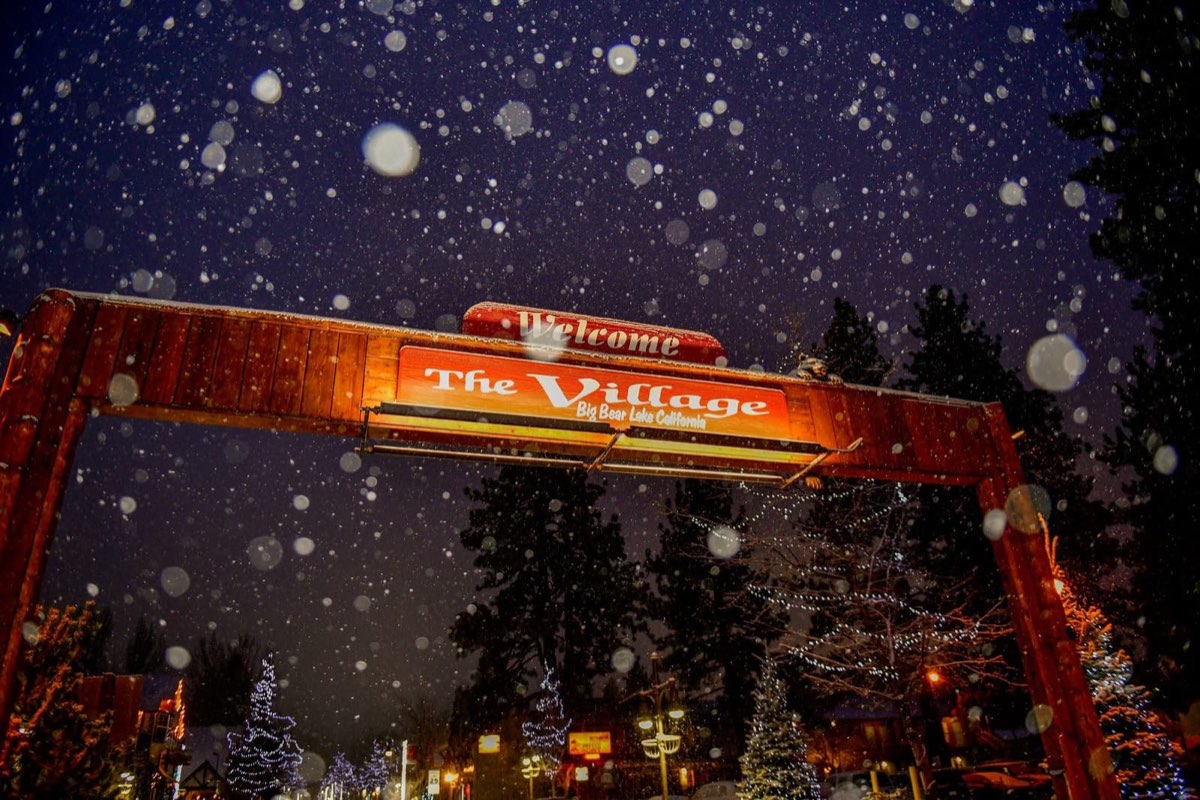
Coverage varies a lot here, street by street, and it varies most when every visitor is on the network at once. If you plan to work from the cabin, or your guests will expect to, test it on the busy weekend rather than the empty one.
Highway 18 and Highway 330 on the Sunday of a holiday weekend are a different experience from the same roads on a Wednesday morning. If this is going to be a regular trip, you should feel it honestly at least once before you commit to it. Some people do that drive and decide they want to be closer to town. That is a useful thing to learn in November rather than after closing.
Everything above matters more, not less. A holiday weekend is one of a handful of weekends a year that set the ceiling on what a short-term rental can earn, so it is the right week to see the property perform. Walk the block and count how many of the surrounding cabins are occupied and how many sit dark. Look at where guests are actually parking. Notice whether the house has the thing people book for in winter, which is usually a combination of being able to get to it, being warm when you arrive, and being close to something.
And be realistic about the rest of the calendar. A cabin that is full at Thanksgiving and Christmas and empty in May is a seasonal business, and the numbers have to work on the whole year, not the four best weekends. If you want to pressure-test a specific property, I am happy to walk through what the realistic occupancy looks like for that street and that bedroom count.
A holiday weekend overstates some things too. You are seeing Big Bear at its busiest and its most charming, with the lights on and the Village full. That is not a normal February Tuesday either, and if you only ever see the town at Thanksgiving you will overestimate how lively your street is in the shoulder season. The ideal is to see a property twice, once when it is full and once when it is quiet. If you only get one visit, make it the busy one. It is easier to imagine a quiet version of a busy street than to imagine a busy version of a quiet one.
If you are up here this week, this is the weekend to do it. I put together a guide to everything happening in Big Bear over Thanksgiving week, with times and addresses, so you can build a day around seeing a few properties and still make the tree lighting.
And if you want someone to walk a street with you and tell you what it is really like in January, call or text me at 909.744.2190. I live here. I will tell you when a house is wrong for you.
A busy winter holiday weekend is the most informative, because you see parking, plowing, heat, neighbors, and traffic all under real conditions. Summer and quiet midweek days show a property at its easiest. If you can only visit once, pick the busy weekend.
Snow parking and the plow berm, who maintains the road, the driveway grade in winter conditions, how the home is heated and how fast it recovers, septic capacity against how many people the house sleeps, cell and internet coverage on that specific street, and whether stated walking distances hold up in cold and dark.
It narrows the buyer pool, and it matters more for a short-term rental than for a primary residence, because guests arrive in whatever they drive and in whatever conditions the day brings. It is not disqualifying. It is a trade-off to price in rather than discover later.
Often yes, though occupied vacation rentals are harder to get into when they are booked, and some sellers prefer not to show on the holiday itself. The street, the parking, the road, the drive, and the neighborhood are all things you can assess without going inside, so the trip is worth making either way.