
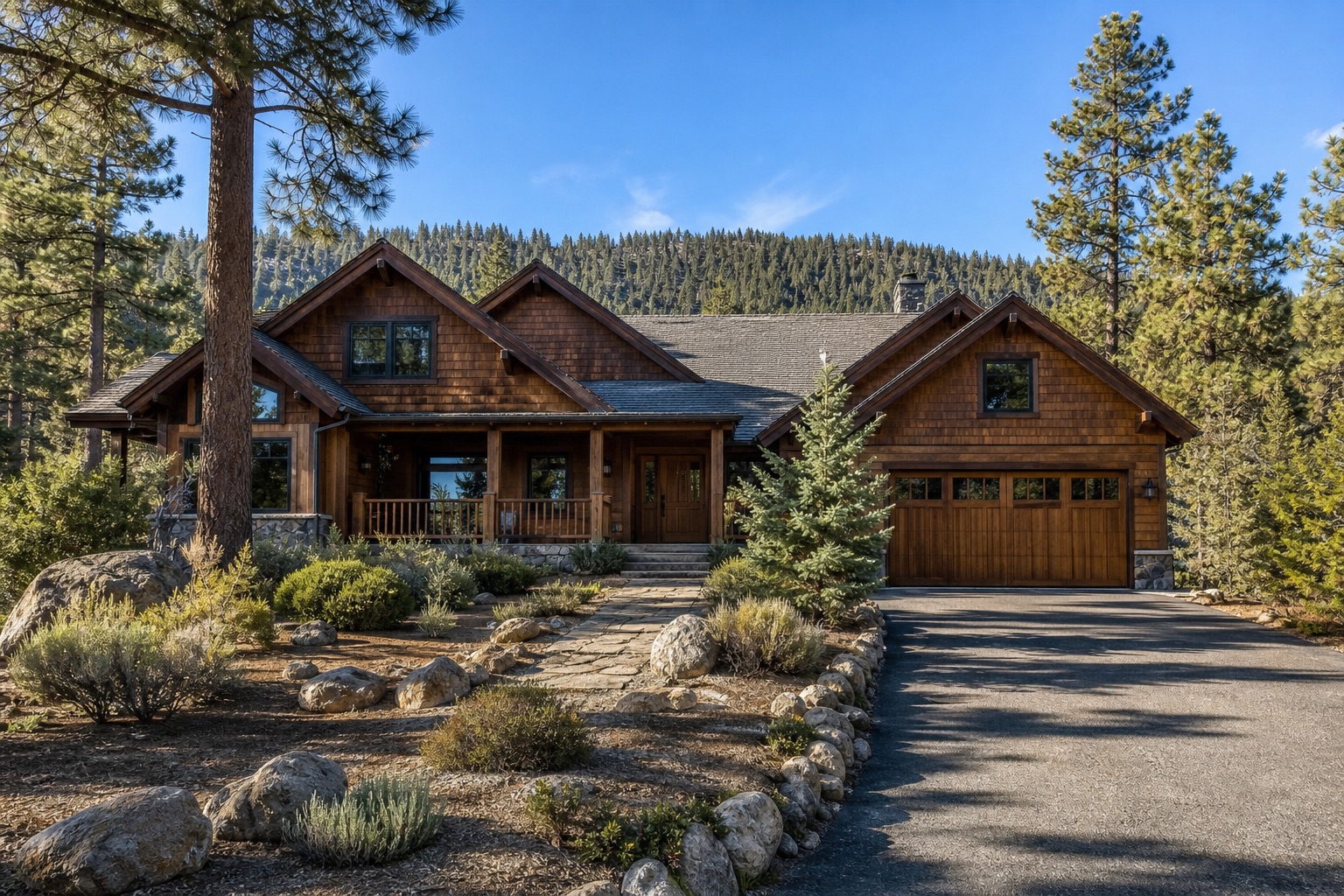
How much does it really cost to sell a home in Big Bear Lake?
Selling a home in Big Bear Lake involves several cost categories beyond agent compensation: escrow and title fees, San Bernardino County’s documentary transfer tax, natural hazard disclosure reports, and mountain-specific prep costs like roof work, deck repairs, and post-rental cosmetic updates. The exact total depends on your sale price, what you negotiate in the contract, and how much you choose to invest before hitting the market.
Most sellers I work with are surprised by how many line items show up on a closing statement. The commission conversation usually happens first, but it’s the combination of escrow fees, title insurance, transfer tax, repair credits, and carrying costs that determines what you actually walk away with. Let me break down each category so you go into this with clear eyes.
The Cost Categories Every Big Bear Seller Should Know
There’s no single number that applies to every sale. What I can do is walk you through every category, tell you which ones are fixed by law, which ones are negotiable, and which ones are entirely your call.
Agent Compensation
Broker fees and commissions are fully negotiable and not set by law. There is no standard, typical, or customary rate. The listing-side fee is agreed upon in your listing agreement. Any compensation a seller chooses to offer a buyer’s agent is optional and separately negotiable. If you want to know what representation would cost in your specific situation, that’s a conversation to have directly with me, not a number to pull from a blog post.
What I will say: representation matters more in a resort market than almost anywhere else. Big Bear doesn’t follow SoCal averages, and pricing from live local MLS data rather than a national estimate is the difference between a clean sale and a price reduction three weeks in.
Escrow and Title Fees
In California, closings are handled by a closing agent, typically an independent escrow company paired with a title insurer. You won’t see an attorney running the closing here the way you might in some other states.
As a seller, you should expect:
- Escrow service fee: Usually a base charge that scales with the sale price, plus per-item charges for things like loan payoff processing and HOA demand handling.
- Owner’s title insurance policy: Local custom in Southern California often has the seller pay for the owner’s policy, though this is negotiable between the parties.
- Title search and related charges: Endorsements, update fees, and search costs depending on the transaction.
Who pays which portion of escrow and title is determined by local custom and your purchase contract, not by state law. Your closing agent will walk you through the preliminary closing statement before you’re committed to anything.
San Bernardino County Documentary Transfer Tax
This one is statutory. San Bernardino County’s documentary transfer tax is set at $0.55 per $500 of real property value (or fractional portion), collected at the time of recording, per the county’s fee schedule and California Revenue and Taxation Code §11911. The rate itself is fixed by law. Who pays it is not: seller-paid, buyer-paid, and shared arrangements are all possible and commonly negotiated. Confirm the allocation in your contract.
Big Bear Lake does not layer an additional city transfer tax on top of the county rate, but it’s worth verifying for any specific address, since special district fees can vary.
Recording Fees and Natural Hazard Disclosures
Recording fees are statutory county charges that show up on the closing statement. Like the transfer tax, who pays them is typically negotiated between the parties and often follows local custom rather than a hard legal rule.
California sellers are also required to provide buyers with a natural hazard disclosure report, ordered through escrow or your agent. In a mountain area like Big Bear Lake, buyers and lenders pay close attention to fire hazard zone designations, forest proximity, and slope conditions. That report is a standard closing-cost line item here, not an optional add-on.
HOA and Private Road Costs (Where Applicable)
If your property is in a homeowners association or subject to a private road agreement, budget for HOA demand fees, resale packet preparation, and any transfer or move-in fees the association charges. These vary significantly by association, so pull that information early in the process. I always request it as soon as we open escrow so there are no surprises at the closing table.
The Costs That Are Entirely Your Decision
The categories above are largely fixed or semi-fixed by law and local custom. The ones below are discretionary, but they directly affect your sale price, days on market, and the repair requests you’ll field after inspection.
Mountain-Specific Prep and Repairs
Big Bear buyers look at things SoCal buyers don’t think twice about. Roof condition and snow load capacity, deck and railing integrity, heating systems (furnace, fireplace, wood stove), window sealing, and driveway access in winter are all on the inspection checklist. If your property has been used as a short-term rental, add cosmetic wear to that list: paint, flooring, fixtures, and appliances take a beating with high turnover.
The question isn’t whether to address these issues. It’s whether you fix them before listing or offer a credit at closing. Both approaches have trade-offs, and the right answer depends on your timeline, budget, and how competitive your price is. This is exactly the kind of decision I walk through with every seller before we go to market. For more on which improvements actually help versus hurt your sale, see my post on renovations that cost you buyers when selling in Big Bear.
Staging and Photography
Because a large share of Big Bear buyers are purchasing second homes or vacation rentals, presentation matters more here than in a typical primary-residence market. Professional photography, drone footage, and staging that speaks to cabin and lakefront aesthetics are standard practice at this price point, not a luxury. These are optional marketing investments, but they influence how quickly you sell and at what price.
Seller Concessions and Repair Credits
Recent local market data shows a median sale price of approximately $555,000 in Big Bear Lake, with 425 active listings and a median of 36 days on market over the trailing 90 days. A separate six-month dataset tracking 250 closed sales through August 29, 2026, reported by Resideline, shows a median sold price of $530,000, with the middle half of sales ranging from $425,000 to $740,000. Redfin’s late-August 2026 data puts the July 2026 median sale price at $549,725, down approximately 5.2% year-over-year.
With inventory running high and homes averaging over a month on market, buyers have negotiating room. Closing cost credits, post-inspection price reductions, and repair allowances are all common asks in this environment. Factor that into your net-proceeds planning, not just your list price.
Carrying Costs During the Listing Period
Every week your home is on the market, you’re paying mortgage interest, property taxes, insurance, utilities, and in winter, snow removal. For a mountain property that may also be generating short-term rental income you’ve paused for showings, those carrying costs add up faster than sellers expect. The current median of 36 days on market is a useful planning benchmark, but individual properties vary widely based on price, condition, and timing.
If you’re thinking through whether now is the right time to list, my post on whether it’s a good time to sell in Big Bear covers the current market conditions in more depth.
A Snapshot of the Current Big Bear Lake Market
Here’s a quick look at recent area-level data to give you context on where your property fits. Individual values depend on condition, street, build year, and timing.
| Area | Median Sale Price | Median Days on Market |
|---|---|---|
| Boulder Bay | $150,000 | 54 |
| Fawnskin | $346,250 | 21 |
These figures are aggregated public listing data for the trailing 90 days as of September 2026. Area-level medians are a starting point, not a valuation. Your specific number depends on your home’s condition, location, build year, and the timing of your sale. That’s where a current local market analysis comes in.
According to Realtor.com’s July 2026 market data, the median listing price in Big Bear Lake is $589,000, with ZIP code 92315 showing a median listing price of $596,500 and a listing price per square foot of $425. Resideline’s six-month dataset puts the median sold price per square foot at $383, with the middle half between $326 and $438. The gap between list and sold price per square foot tells you something important about buyer expectations in this market right now.
For a deeper look at how market conditions affect your selling strategy, the Big Bear guide to selling in a slow market is worth a read if you’re concerned about timing.
The only way to know what you’ll actually net is to run a personalized analysis against current comps and your specific property. Get a free home valuation here and I’ll put together the numbers for your address.
If you’d like to read what other sellers and buyers have experienced working with me, you can check my reviews on Google or Zillow.
Frequently Asked Questions
What closing costs does a seller typically pay when selling a home in Big Bear Lake?
Big Bear Lake sellers generally pay a share of escrow fees, the owner’s title insurance policy, the San Bernardino County documentary transfer tax, natural hazard disclosure report costs, and any HOA demand or resale packet fees. Recording fees also appear on the closing statement. Who pays which items is negotiable between the parties and confirmed in the purchase contract, so the exact split varies by transaction.
Does the seller or the buyer pay the documentary transfer tax in San Bernardino County?
The San Bernardino County documentary transfer tax is set at $0.55 per $500 of property value and is collected at recording. Who pays it is not fixed by state law. Seller-paid is common in practice, but buyer-paid and shared arrangements are both possible and should be specified in your purchase contract.
Are repair requests and credits common in Big Bear Lake home sales?
Yes, and they’re worth planning for. Mountain properties get scrutinized for roof condition, deck integrity, heating systems, and weatherization. In the current market, with inventory elevated and homes averaging around 36 days on market, buyers have room to negotiate. Whether you address items before listing or offer a credit at closing is a strategic decision that depends on your timeline and price point. I walk through that trade-off with every seller I work with.
How long are homes taking to sell in Big Bear Lake, and how does that affect my costs?
Recent local market data shows a median of 36 days on market over the trailing 90 days, though individual properties vary significantly. Every week your home is listed, you’re carrying mortgage interest, property taxes, insurance, utilities, and possibly snow removal or landscaping costs. If your property is a short-term rental, you may also be forgoing rental income during the listing period. Pricing accurately from day one is the most effective way to minimize those costs.
Do I need to stage my Big Bear vacation rental before listing, or is basic cleaning enough?
Basic cleaning is the floor, not the ceiling. Because many Big Bear buyers are purchasing a second home or investment property, they’re evaluating the lifestyle and rental potential as much as the square footage. Professional photography, drone footage, and staging that reflects the mountain cabin aesthetic tend to produce stronger offers at this price point. These are optional costs, but they’re investments that typically pay back in sale price and time on market.
Equal Housing Opportunity. Rachael Smith-Meadors, Broker Associate, licensed by the California Department of Real Estate. This article is general information only and does not constitute legal, tax, or financial advice. Confirm your specific costs and terms with your closing agent, tax advisor, or lender.