
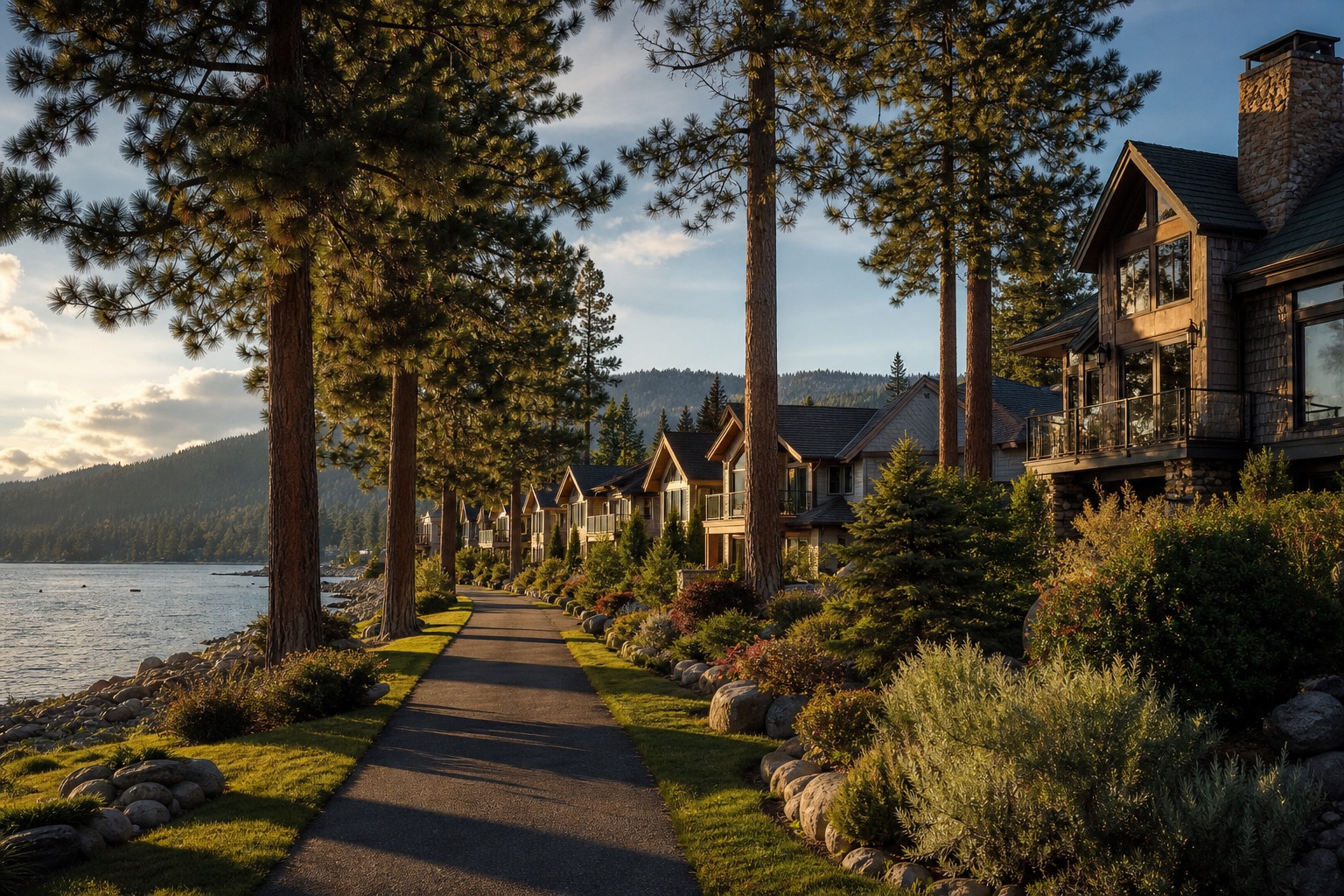
Do Big Bear lakefront estates really offer unmatched luxury?
Yes, and the reasons go well beyond the view. What makes properties in Big Bear offer unmatched luxury is the combination of direct shoreline frontage on a 22-mile freshwater lake at roughly 7,000 feet elevation with a four-season mountain lifestyle just 100 miles from Los Angeles. True lakefront estates, those with private or deeded shoreline access, potential dock rights, and high-end construction, sit in a category well above the broader Big Bear market and appeal strongly to buyers seeking a second home, a legacy property, or a high-performing short-term rental.
Key Takeaways
- The area-level median sale price across Big Bear Lake is $560,000 (recent local market data, trailing 90 days as of September 2026), but true lakefront estates trade well above that figure depending on frontage, dock rights, and condition.
- Big Bear Lake has approximately 22 miles of shoreline, but “lakefront” covers a wide range, direct frontage with dock rights, shared shoreline access, and elevated lake-view lots are three very different ownership positions.
- Big Bear Mountain Resort operates year-round, supporting a four-season lifestyle that goes well beyond a typical summer lake market.
- Marina access closes in late fall and winter; the shoreline remains open for fishing year-round, and buyers should understand the seasonal rhythm before assuming identical lake access in every month.
- Buyers should verify shoreline boundaries, dock or mooring rights, road and snow-removal responsibilities, and STR permit eligibility for any specific address before making an offer.
What makes a Big Bear lakefront estate different from a standard mountain cabin?
The short answer: everything from the land rights to the price point to the ownership experience.
Big Bear Lake is a man-made freshwater reservoir approximately seven miles long, sitting inside San Bernardino National Forest at roughly 6,700 to 7,000 feet above sea level. That setting alone separates it from the typical Southern California second-home market. Add direct water frontage, and you have a property type that is genuinely scarce, there are only so many lots along those 22 miles of shoreline, and only a fraction of them carry the deeded access, dock rights, and square footage that define a true estate.
When buyers tell me they want a “lakefront home,” I always clarify what they mean, because the market uses the term loosely. There are four distinct categories worth understanding:
- Direct shoreline frontage with private or deeded dock/mooring rights, the top tier, and the rarest
- Direct shoreline frontage without dock rights, still true waterfront, but with different water-access terms
- Shared shoreline access, the property backs to a common waterfront area rather than private frontage
- Lake-view lots on elevated terrain, panoramic views, no shoreline access
Each of these represents a different ownership experience and a different price point. A buyer who wants to moor a boat steps off the back deck needs to confirm deeded dock rights before the offer goes in, not after. That verification is something I walk every lakefront buyer through as part of the due-diligence process.
The four-season lifestyle argument
Most lake markets are summer stories. Big Bear is not. Big Bear Mountain Resort operates year-round, with skiing and snowboarding in winter and mountain biking in summer. The broader recreation picture includes fishing, boating, water sports, hiking, horseback riding, a nine-hole golf course, and a full complement of restaurants and shopping, all within a few miles of the waterfront.
That four-season depth is a core part of what makes properties in Big Bear offer unmatched luxury as a second home: owners aren’t buying a place they’ll use for three months and close up for nine. They’re buying into a destination that generates demand, and rental revenue, if that’s part of the plan, across every season. If you’re evaluating the investment angle, my Big Bear Lakefront Homes: Investment Guide goes deeper on the revenue side of waterfront ownership.
Which Big Bear neighborhoods have lakefront estate options?
The lake’s 22 miles of shoreline runs through several distinct communities, and the character of the waterfront varies by side of the lake.
The south shore, including the city of Big Bear Lake proper, Boulder Bay, and the areas near the Village, carries the densest concentration of established waterfront properties and tends to see the most buyer activity. Boulder Bay sits on the western end and offers some of the most direct, private-feeling waterfront positions on the south shore.
The north shore, anchored by Fawnskin, runs quieter. Fewer properties, more space between them, and a pace that suits buyers who want privacy over proximity to the Village. If that appeals to you, the post on Fawnskin: The Quiet Side of Big Bear Lake Real Estate covers what that side of the market actually looks like.
Here’s how the area medians compare across the three most active waterfront-adjacent markets in recent local data (trailing 90 days, as of September 2026):
| Area | Median Sale Price | Median Days on Market |
|---|---|---|
| Big Bear Lake | $560,000 | 44 |
| Boulder Bay | $169,450 | 38 |
| Fawnskin | $304,250 | 40 |
These are area-level medians across all property types, they include everything from small cabins to large estates. True lakefront estates with direct frontage and dock rights trade at a meaningful premium above these figures. The medians give you a baseline for the broader market; the specific number for a waterfront estate depends on frontage, condition, build year, and what access rights are actually conveyed in the deed.
What to verify before you make an offer
Lakefront estates carry a longer due-diligence checklist than a standard mountain cabin, and the items that surprise buyers most are usually the ones that aren’t visible in the listing photos.
Before any offer, I tell buyers to confirm:
- Shoreline boundary and ownership, exactly where the property ends and public or shared land begins
- Dock and mooring rights, whether they’re deeded, permitted, or informal arrangements that could change
- Road and winter access, at 7,000 feet, snow removal responsibilities and road conditions matter more than they do at lower elevations
- HOA or shared-access agreements, if shoreline access is shared, what are the terms and costs
- STR permit eligibility, city and county rules differ and change; confirm the current status for the specific address if rental income is part of the plan
- Seasonal use limitations, marinas close in late fall and winter, and boating access is a warm-weather proposition
The visitor safety guidelines from Visit Big Bear also note that swimmers must stay within 50 feet of shore or 20 feet of a private dock, a practical detail that affects how you plan waterfront recreation for guests and family. During winter, the lake can freeze, and the public is prohibited from going onto the ice. These aren’t dealbreakers, but they’re facts every lakefront owner should know before closing.
Every lakefront purchase I’ve handled has had at least one item on that list that required extra digging. That’s not unusual, it’s the nature of waterfront property. The buyers who go in with clear expectations about what they’re verifying are the ones who close with confidence.
Is a Big Bear lakefront estate the right move for you?
That depends on what you’re actually trying to accomplish. The reasons properties in Big Bear offer unmatched luxury, direct water frontage, four seasons of recreation, proximity to Los Angeles, hold true across buyer types, but “right for you” means running the numbers on your specific situation, not on the category in general.
The broader Big Bear market had 422 active listings and 151 homes sold in the trailing 90 days as of September 2026, per recent local market data. True lakefront estates with direct frontage represent a small subset of that inventory. When they come to market, they move. The 44-day area median includes the full price spectrum; well-priced lakefront properties with strong access rights tend to attract serious buyers quickly.
If you’re weighing this as a primary residence, a second home, or a rental investment, the calculus is different in each case. I’m happy to walk through the specifics with you, what’s available, what access rights are actually conveyed, and what the realistic ownership costs look like at this elevation. That conversation is always free and always worth having before you start making offers.
If you’ve worked with me before or want to hear from buyers and sellers who have, you can read my reviews on Google and Zillow.
FAQ
What do lakefront estates in Big Bear Lake typically include?
True lakefront estates typically include direct shoreline frontage, private or deeded dock and mooring rights, and high-end construction with features like open great rooms, expansive decks, and views oriented toward the water. The specific amenities vary significantly by property, some include boat houses or guest quarters, others are more modest in footprint despite the waterfront location. Buyers should verify exactly what access rights and structures are included in the deed, not just what’s described in the listing.
Which Big Bear Lake neighborhoods have the best waterfront access?
The south shore, including the city of Big Bear Lake, Boulder Bay, and areas near the Village, has the densest concentration of established waterfront properties. The north shore community of Fawnskin offers more private, spread-out waterfront positions for buyers who prioritize space and quiet over proximity to amenities. The right neighborhood depends on what you value most: convenience, privacy, or a specific orientation on the lake.
Can Big Bear lakefront homes have private docks?
Some can, yes, but dock and mooring rights are property-specific and must be verified in the deed or through the relevant permitting authority before you rely on them. Not every home with shoreline frontage has deeded dock rights, and not every dock arrangement is permanent. This is one of the first things I confirm for any lakefront buyer before an offer goes in.
Are Big Bear Lake waterfront properties usable year-round?
The property itself is usable year-round, and Big Bear’s four-season recreation, skiing, snowboarding, hiking, fishing, actually makes winter one of the most active ownership periods. That said, marinas close in late fall and winter, so boating access is a warm-weather proposition. Shoreline fishing remains available year-round, and the lake can freeze in winter, which affects how you use the waterfront in colder months.
How far is Big Bear Lake from Los Angeles?
Big Bear Lake is approximately 100 miles northeast of Los Angeles, according to Visit Big Bear. Drive time varies by traffic and season, winter conditions on Highway 18 and Highway 38 can extend the trip, and chains or snow tires are sometimes required. For buyers commuting occasionally rather than daily, the distance is very manageable; for those planning frequent weekend use, road conditions and seasonal access are worth factoring into the decision.
Big Bear lakefront estates offer unmatched luxury in a setting that very few markets can replicate, direct water frontage, four seasons of recreation, and just over an hour from one of the largest metro areas in the country. If you want to know what’s available right now and what the access rights actually look like on a specific property, reach out for a free consultation and I’ll pull the current inventory with you.
Equal Housing Opportunity. Rachael Smith-Meadors, Broker Associate, California Department of Real Estate. This article is general information only and does not constitute legal, tax, or financial advice, confirm your own numbers with your closing agent, tax advisor, or lender.